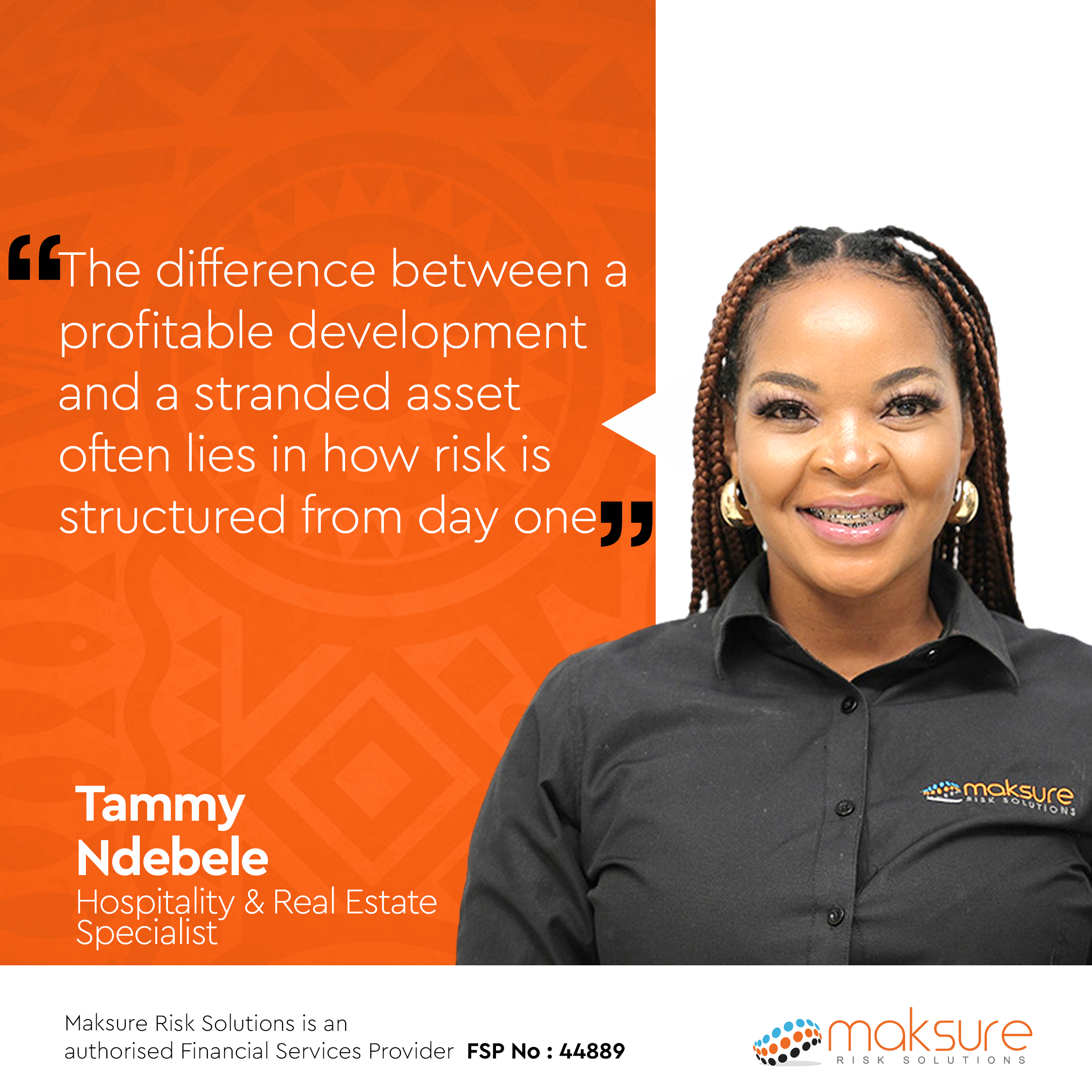
Ground Up, Risk Down: Why the Next Generation of Property Development Requires Capital Resilience
The days of “build it and they will come” are officially behind us. In today’s volatile economic and climate landscape, breaking ground requires much more than a prime piece of land and a blueprint. It demands robust capital protection and deep risk foresight.
For modern developers, the line between a highly profitable asset and a stranded project often comes down to how risk is structured before the first shovel hits the dirt. As insurance and reinsurance brokers, we see firsthand that the most successful developers build for risk resilience, ensuring their pipelines are bankable, insurable, and built to last.
Here is how forward-thinking developers are partnering with risk architects to shift the paradigm and secure long-term value.
1. Risk-Informed Demand: Mapping Volatility Before Value
Market research is no longer just about demographic shifts; it is about risk mapping. Before targeting a specific niche - whether it is high-density mixed-use precincts or luxury hospitality hubs; developers must analyse the underlying risk profile of the region. By assessing macroeconomic factors, local regulatory shifts, and historical data, developers can ensure they are building into sustainable demand rather than a localised bubble that global capital markets are hesitant to back.
2. Location 2.0: Navigating the New Geography of Risk
Location will always drive asset value, but from a reinsurance perspective, a prestigious postal code means very little if it sits squarely in an expanding catastrophe zone. As global weather patterns shift, what was considered a safe zone a decade ago may now face heightened flood, wildfire, or seismic exposure. Modern developers must look at location through a dual lens: urban connectivity for the user, and risk mitigation for the underwriter. Integrating smart infrastructure and resilient site design early ensures the property remains insurable at competitive rates.
3. Hyper-Focus on the Human Experience (HX) and Liability
We have shifted from building walls to resiliently managing human environments. Whether designing a boutique resort or a smart commercial space, the Human Experience (HX) dictates asset value, but it also dictates liability. Elevating the user experience means integrating smart building technology, advanced security systems, and wellness-focused infrastructure. From a brokerage perspective, these features do not just attract premium tenants; they actively mitigate operational liabilities and slip-and-fall risks, lowering the asset's overall risk profile.
4. Sustainability as an Underwriting Advantage
Green building is a core financial and insurance strategy. Incorporating sustainable practices, such as energy-efficient smart grids, net-zero carbon initiatives, and resilient, fire-resistant building materials, dramatically lowers operational expenditure. More importantly, sustainable and resilient assets command highly favorable terms in the global reinsurance market, as institutional underwriters increasingly favor ESG-compliant, low-emission structures.
5. Radical Risk Engineering from Day Zero
In a volatile economic climate, risk management cannot be an afterthought left for post-completion. The most resilient developers bake risk engineering directly into their initial feasibility studies. By involving insurance and reinsurance brokers during the design phase, developers can structure complex risk-transfer mechanisms, such as delayed-start-up coverage, environmental liability, and tailored project insurance. Protecting your capital lifecycle against supply chain disruptions, inflation shocks, and regulatory delays is what separates successful completions from stalled projects.
6. Agility and the Insurable Future
The built environment must be as agile as the capital that funds it. The most successful modern developments are designed with adaptability in mind; such as commercial spaces that can pivot into residential lofts or hospitality assets designed to morph into co-working hubs. However, structural flexibility alters the property’s risk profile. Designing with foresight means ensuring that as the asset evolves, its structural integrity and risk frameworks can adapt seamlessly without triggering massive premium hikes.
The Bottom Line
Great development is about pioneering dynamic, risk-resilient ecosystems that generate compounding value for investors while maintaining a rock-solid balance sheet against global volatility.
How is your current pipeline partnering with risk architects to secure the global capital market's backing?
Connect with Tammy to discuss future-proofing your development pipeline or structuring resilient risk-transfer solutions.
Tammy Ndebele is a Specialist Broker for Hospitality and Real Estate at Maksure Risk Solutions. With a keen eye for shifting market dynamics and global capital trends, Tammy partners with developers, investors, and asset managers to design robust, future-proof risk and reinsurance structures. Known for her forward-thinking approach, she helps clients navigate complex property lifecycles, turning risk management into a strategic advantage from the ground up.
Recent Posts

The Hidden Cost of Mining Growth Is Complexity – and How to Master It.


5 tendencias que marcarán el mercado de reaseguros en México en 2027
Beyond the Horizon: Why Port Risk Management Demands an End-to-End Supply Chain Perspective

Lo que los mercados de seguros de Sudáfrica y Méxicopueden aprender el uno del otro
One Workforce, Many Countries: Navigating Pan-African Healthcare with Strategic Precision.


Linking African Risks to Global Markets from a London Perspective