When Ground Risks Transcend Operational Failures: A Strategic Perspective on Aviation Liability
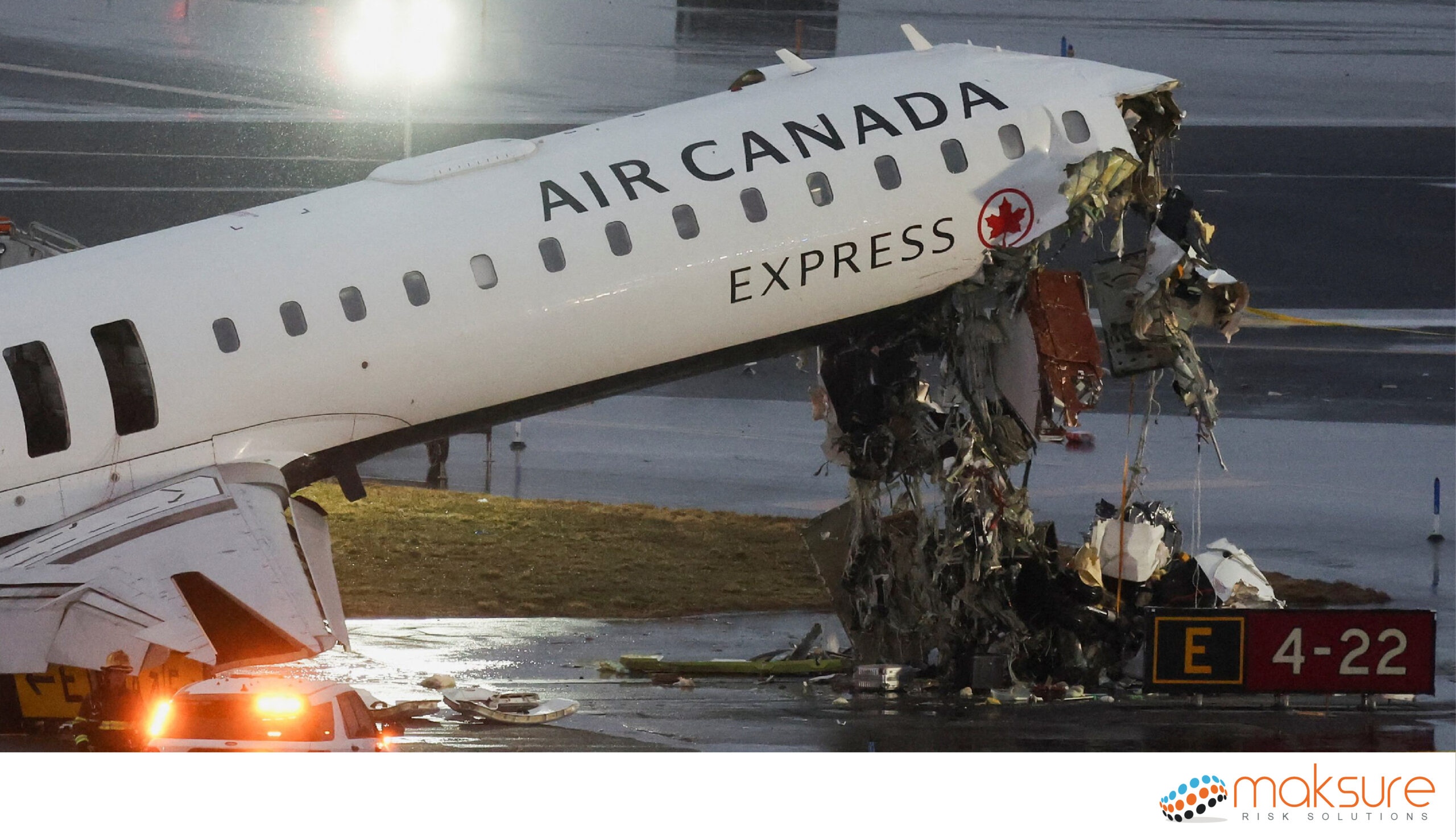
Recent occurrences, such as the collision between a commercial aircraft and an airport fire vehicle at New York’s LaGuardia Airport, serve as a stark reminder of a fundamental reality within the aviation sector: the most catastrophic financial and operational losses frequently materialize before an aircraft ever leaves the tarmac.
For global risk architects, these incidents are not merely isolated operational lapses. They represent multi-dimensional risk events that rigorously test the integrity, clarity, and responsiveness of modern aviation insurance structures.
The Complexity of the Airside Ecosystem
Airside environments are among the most congested and operationally intense ecosystems in the global transport sector. The seamless movement of aircraft, emergency responders, ground crews, and airport operators requires a level of precision that leaves zero margin for error. When this coordination falters, the resulting impact is rarely confined to a single entity. The consequences escalate rapidly to encompass:
- Substantial Hull Damage: The high replacement and repair costs of modern airframes.
- Multi-Party Liability: Complex legal entanglements between airlines, airport authorities, and service providers.
- Third-Party Claims: Potential bodily injury or psychological trauma experienced by passengers and personnel.
- Systemic Disruption: Significant reputational damage and the long-term cost of operational downtime.
From the Lloyd’s of London market perspective, these are seldom straightforward losses. They require a sophisticated understanding of how diverse liability towers intersect under pressure.
Expanding the Liability Framework
To maintain a robust risk posture, stakeholders must look beyond standard airline hull and liability cover. A holistic approach requires a deep dive into the specific exposures of every entity on the airfield.
1. Airport Owners and Operators Liability
Entities managing airport infrastructure carry immense exposure for incidents occurring within their operational control. This includes the maintenance of safe operating environments and the management of airside vehicle movements. Liability programmes must be engineered to reflect these dynamic, real-time risks rather than relying on static, historical data.
2. Air Traffic Control (ATC) Liability
Air traffic control is the central nervous system of ground movement. Any breakdown in communication or situational awareness can be the primary catalyst for a loss event. Dedicated ATC liability coverage is an essential component of a comprehensive risk strategy, particularly within high-density international hubs.
3. Ground Handling and Service Provider Exposure
The introduction of third-party contractors; ranging from refuelling crews to emergency responders, adds layers of complexity. It is imperative that these entities are contractually and programmatically aligned with the overarching insurance framework to prevent gaps in indemnity.
Critical Considerations for Risk Transfer
As the industry evolves, several strategic imperatives have emerged for those seeking to mitigate ground-based catastrophes:
- Contract Certainty and Liability Mapping: Clear delineation of responsibility is the only way to avoid protracted disputes. Every stakeholder must understand exactly where their liability ends and another entity’s begins.
- Integrating Emergency Protocols: Emergency response maneuvers introduce a unique risk profile. Insurers increasingly scrutinize how these protocols are embedded and tested across the airport ecosystem.
- Elevating Ground Risk Status: Taxiing and apron operations are often treated as secondary risks. However, given their contribution to claims frequency, they must be treated as a core underwriting consideration.
- Cross-Stakeholder Alignment: Aligning the insurance structures of airlines, airport operators, and ATC providers ensures that when a multi-party loss occurs, the claims process is frictionless and efficient.
The Maksure Value Proposition
At Maksure Risk Solutions, we recognize that aviation risk does not commence at take-off. It begins the moment an aircraft moves. Our expertise lies in navigating the intricate web of airside exposures to protect the financial interests of our clients.
We provide unparalleled value by:
- Engineering Bespoke Multi-Party Programmes: Creating cohesive structures that eliminate the "silo" effect in aviation insurance.
- Strategic Advisory: Offering deep technical insights into airport and ATC liability exposures that many generalist brokers overlook.
- Market Access: Leveraging our profound relationships within the Lloyd’s of London market to place complex risks that require significant capacity and specialized wording.
Secure Your Operational Future
The landscape of aviation risk is shifting. As loss scenarios become more complex, your insurance programme must be equally sophisticated. Do not leave the resilience of your operations to chance.
Contact Maksure Risk Solutions today to conduct a comprehensive review of your aviation liability framework and ensure your assets are protected from the ground up.
About Maksure Risk Solutions
Maksure Risk Solutions is an Afro-Global independent specialist insurance and reinsurance broker with business footprint in Africa, Asia, East & Western Europe, South America and the Caribbean. We provide innovative and tailor-made risk solutions in Insurance and Reinsurance as well as Risk Financing and Actuarial Consulting geared towards capital management and strengthening our client’s balance sheet. Maksure is also one of the major players in Captive Management (Establishment & Management) in South Africa, Mauritius, Bermuda and various other jurisdictions. We have access into the Lloyds of London with a deep understanding of African markets. Our global nature ensures that our clients access quality capacity as well as some of the world’s latest thinking and solutions.
Recent Posts

The Hidden Cost of Mining Growth Is Complexity – and How to Master It.


5 tendencias que marcarán el mercado de reaseguros en México en 2027

Beyond the Horizon: Why Port Risk Management Demands an End-to-End Supply Chain Perspective

Lo que los mercados de seguros de Sudáfrica y Méxicopueden aprender el uno del otro

One Workforce, Many Countries: Navigating Pan-African Healthcare with Strategic Precision.



Linking African Risks to Global Markets from a London Perspective